Context before interpretation
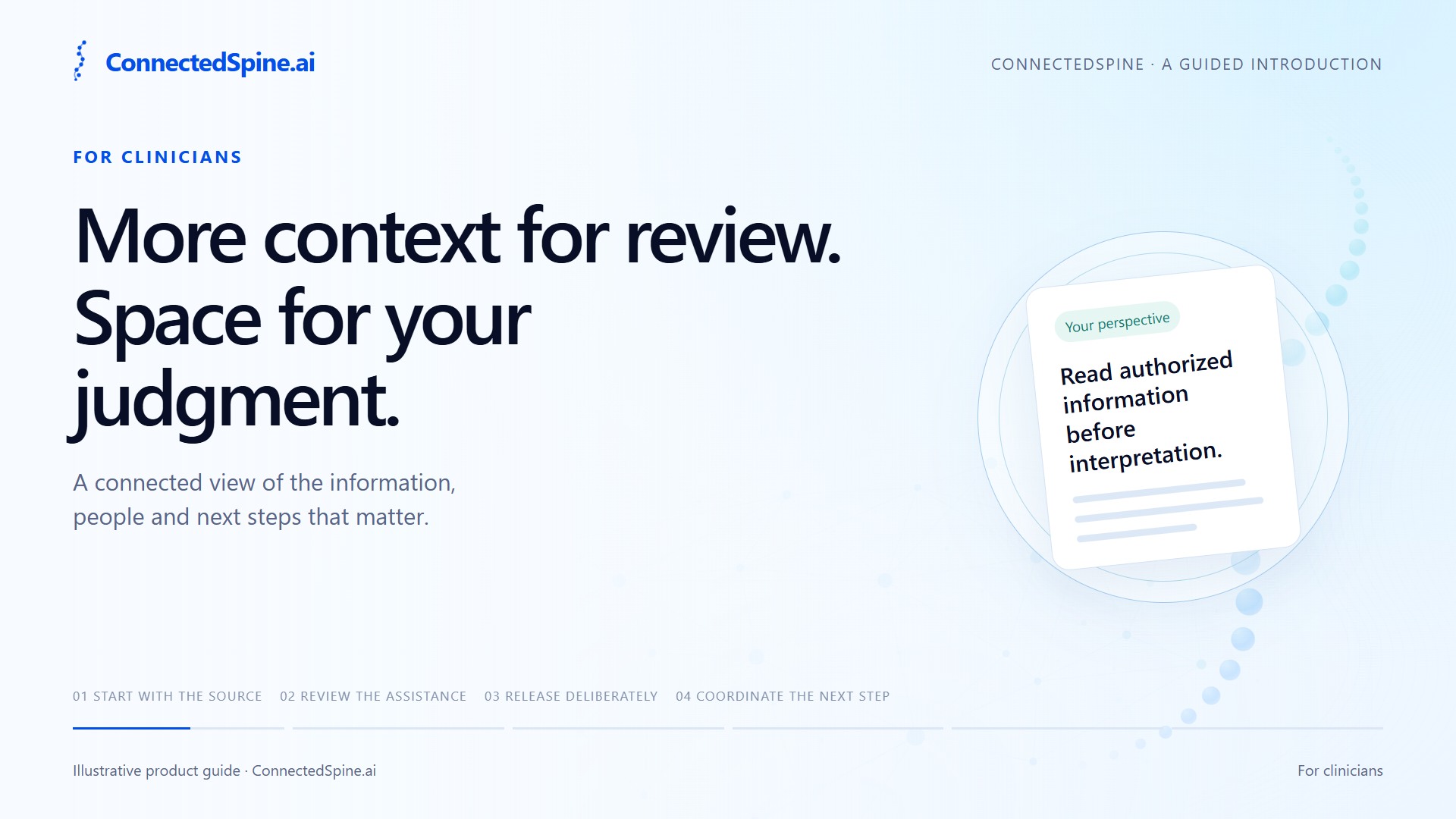
Review authorized original information while preserving the distinction between a source and your professional view.
For clinicians
Bring patient information, source-linked assistance and care coordination into focus, with professional judgment visible throughout the review.
Your perspective
Bring patient information, source-linked assistance and care coordination into focus, with professional judgment visible throughout the review.
ConnectedSpine brings authorized information, reviewable assistance, and care coordination into a clearer professional workflow. Your judgment remains central. Start with the original patient-reported information and available source context. Keep those sources distinct from your interpretation. Request John assistance explicitly when the context and purpose are permitted. Examine the suggestion, evidence, uncertainty, and limits. Develop the plan, review its exact version, and complete the required signatures before releasing patient-facing information. Connect referrals and follow-up to the reviewed plan, with responsibilities and recorded actions visible. Explore the clinical workflows and the separate Teaching workspace, then follow the professional access information that applies to you.
Start with the original patient information. Consider assistance from John alongside its sources and uncertainty. Develop your professional interpretation, then review, sign and release the intended patient-facing information.
Review authorized original information while preserving the distinction between a source and your professional view.
Evidence, uncertainty and missing context remain part of the review. Clinical decisions remain yours.
Private interpretation stays distinct from the exact information explicitly released to a patient.
See each feature work
Watch the film and explore each step. See who acts, what is shared and what happens next.
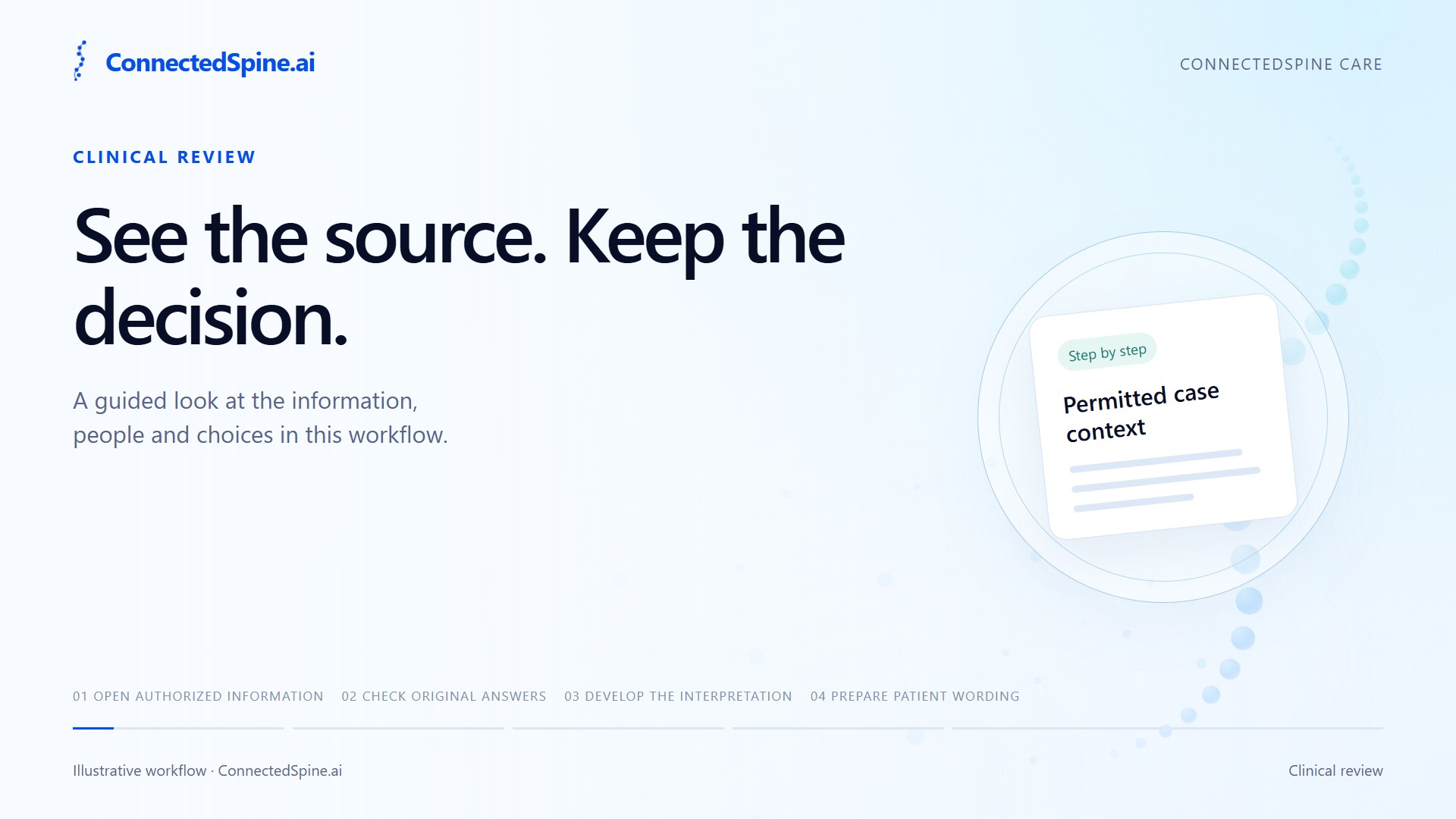
Clinical review starts with understanding the original information. Open the case context you are authorized to review. Check the patient's original answers and their source. Develop your professional interpretation in a private draft. Prepare clear wording for the patient to understand. Source, interpretation, and patient wording stay distinct. Signature and release are separate actions.
Keep source information, professional interpretation and patient wording distinct.
Permitted case context
Private drafts remain separate. Preparing patient wording is not a signature or a release to the patient.
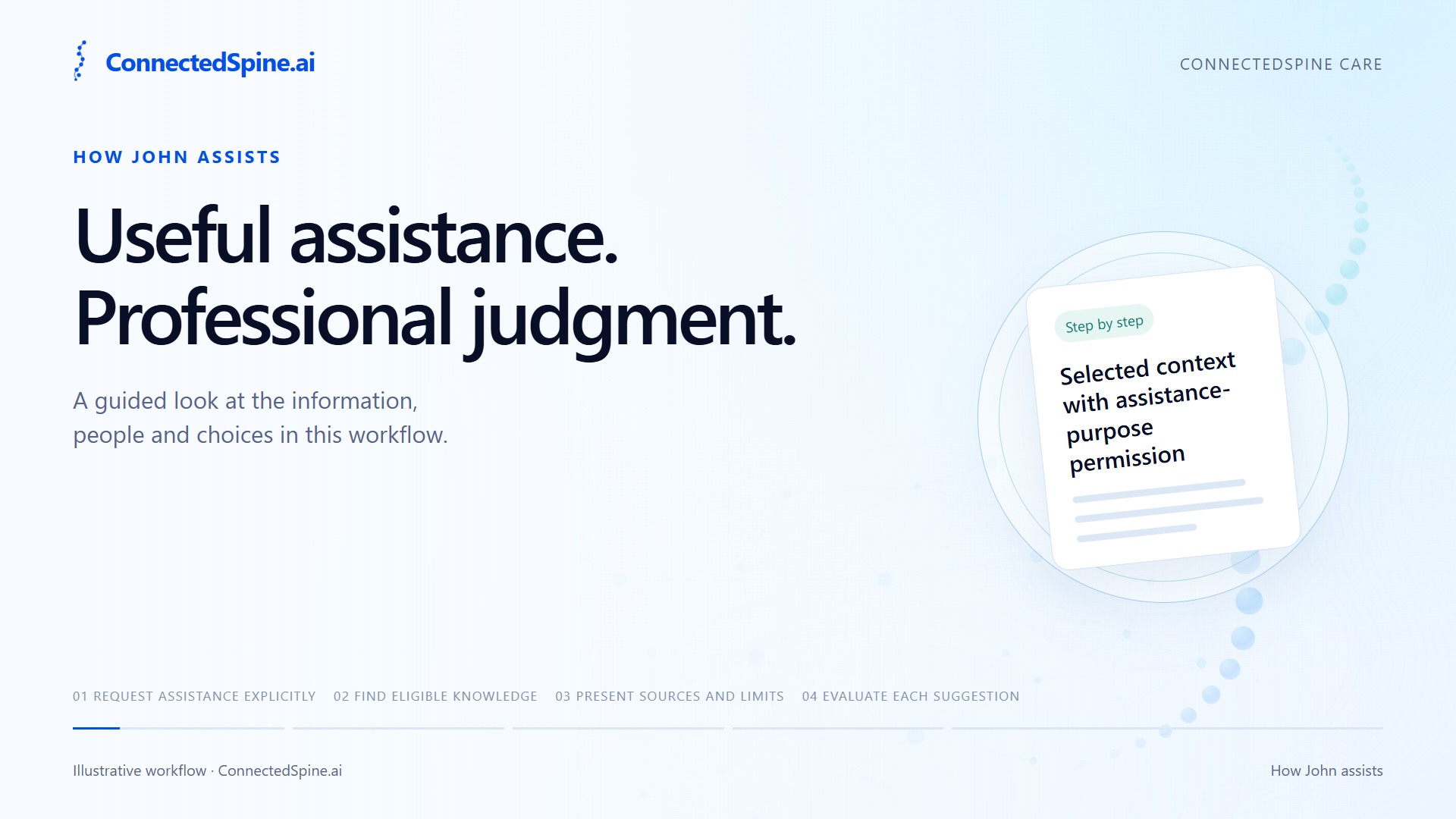
John supports professional review with context and sources. An authorized clinician explicitly requests assistance for permitted context. John finds relevant, eligible released knowledge. The suggestion includes sources and limitations to examine. The clinician evaluates the suggestion and makes the decision. Assistance remains advisory. Diagnosis, prescribing, signatures, and patient release remain professional responsibilities.
Bring authorized case context and eligible knowledge into suggestions for professional review.
Selected context with assistance-purpose permission
Assistance is advisory. It does not independently diagnose, prescribe, order, sign or release information.
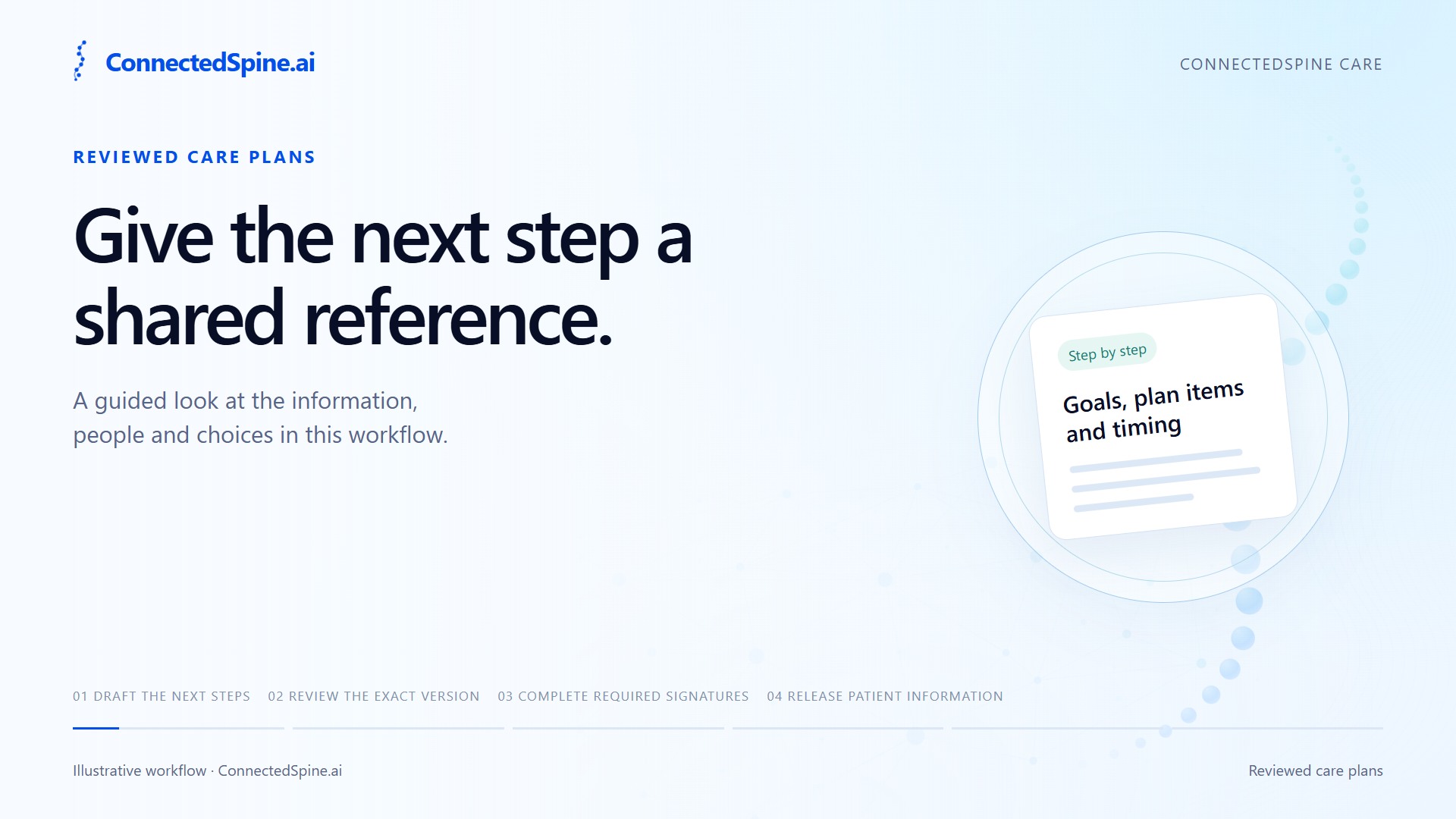
A reviewed care plan brings the next steps into focus. Draft the goals, responsibilities, and timing. Review the exact plan version and its details. Complete the primary signature and any required co-signature. Release the intended patient-facing information. Patients see the released version. A revised draft receives its own review and required signatures.
Keep goals, responsibilities and next steps together in a reviewed plan.
Goals, plan items and timing
Patients see the released version. A revised draft needs its own review and any required signatures.
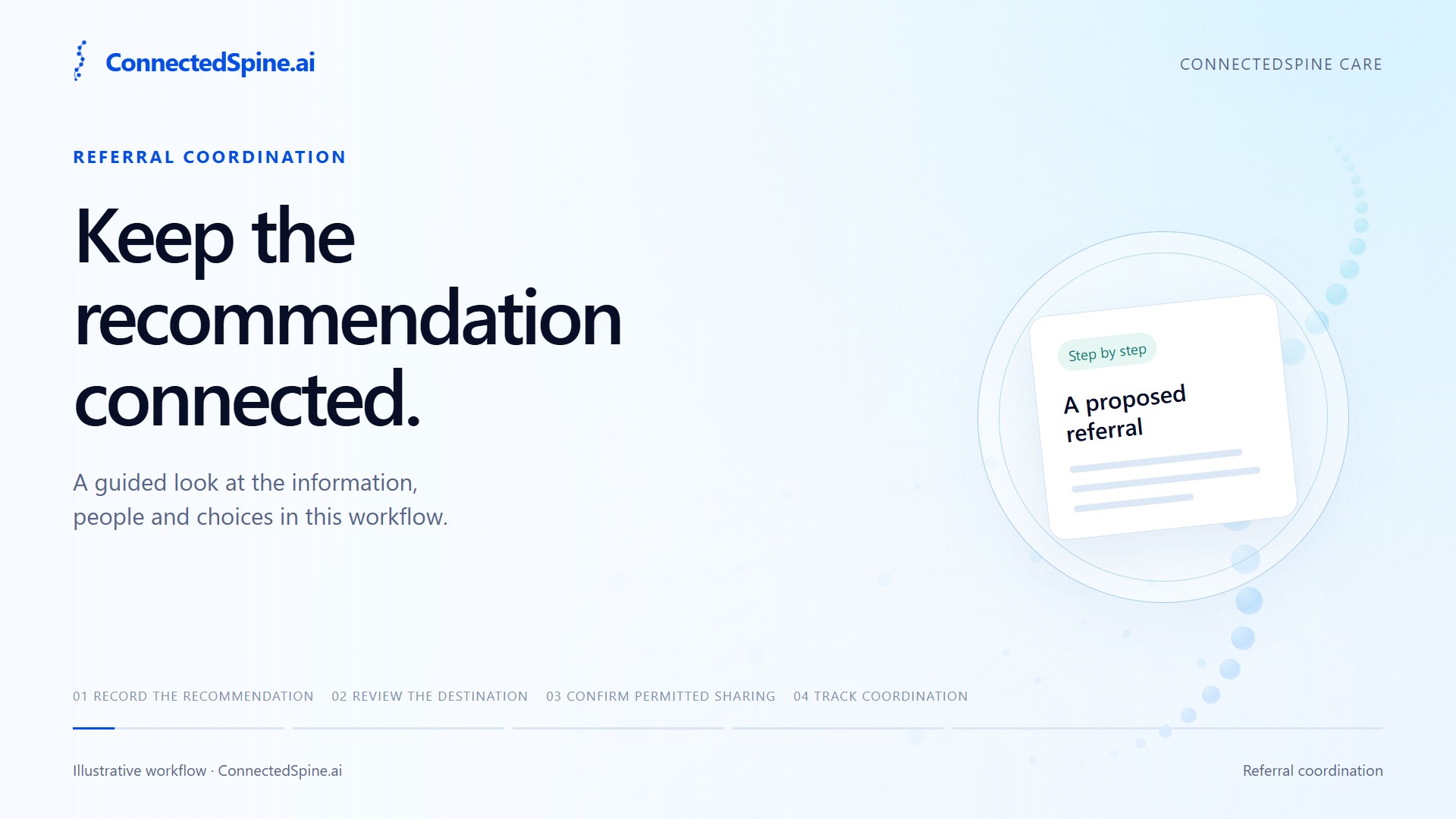
Referral coordination connects a recommendation with a clear next step. The clinician records a proposed referral. The patient reviews its destination and purpose. Confirm which information may be shared for this referral. The care team tracks the recorded coordination status. An appointment, recipient acceptance, and payer approval each require their own confirmation.
Follow a clinician recommendation through permission and coordination.
A proposed referral
Referral coordination does not promise external delivery, recipient acceptance, an appointment or payer approval.
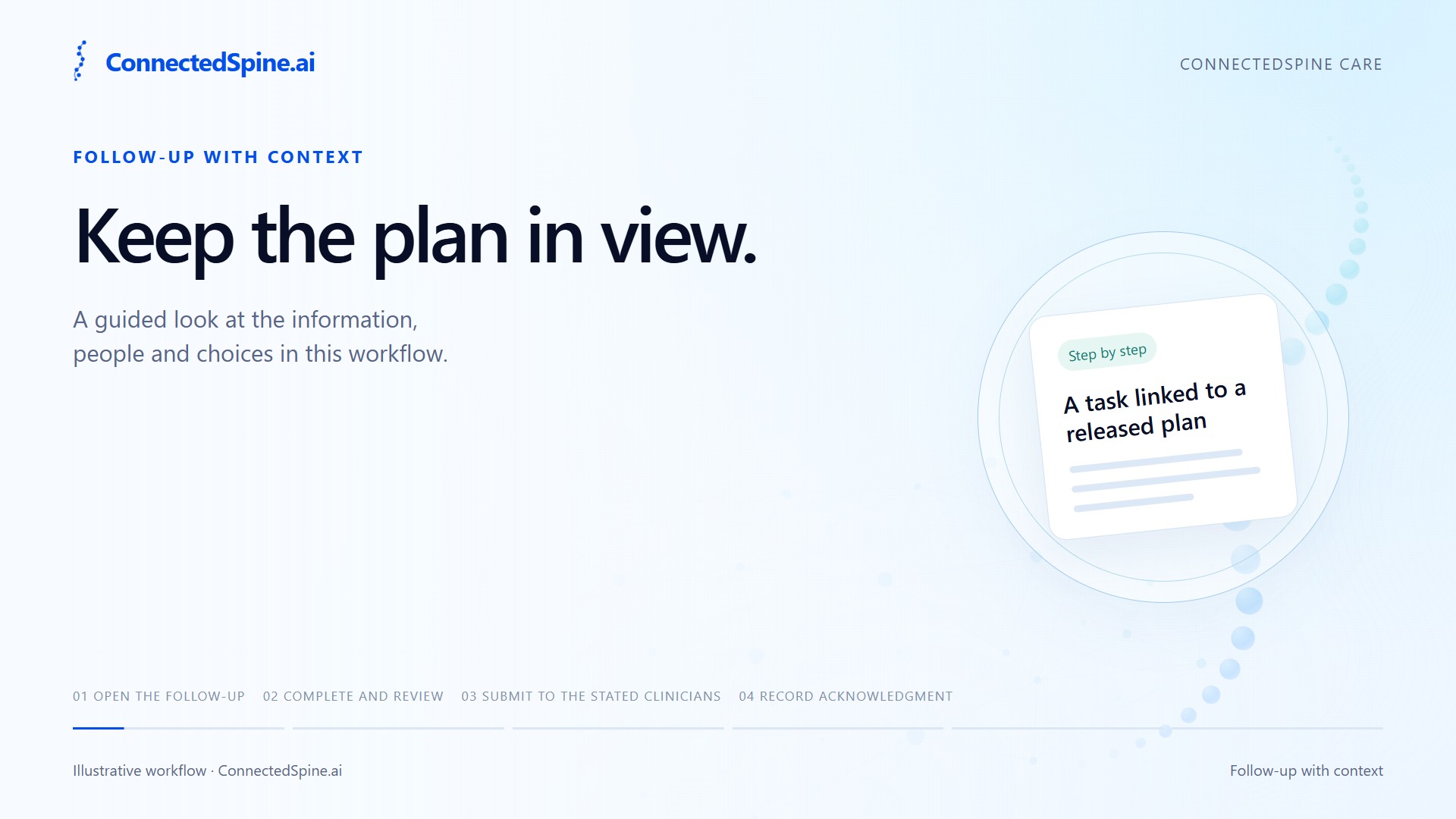
Follow-up keeps your response connected to the plan. Open the task linked to your released care plan. Complete the response and check what you have written. Submit it to the clinicians stated for this follow-up. A clinician can record an acknowledgment. Acknowledgment records a review action. Your clinician remains responsible for the clinical interpretation and next decision.
Respond to the follow-up linked to your released plan.
A task linked to a released plan
Acknowledgment records a review action. It does not establish agreement, completed treatment or clinical clearance.
Take the next step
Explore a care workspace that connects patient preparation, deliberate sharing and clinician-reviewed next steps.
Organize your questions, relevant information and goals before submitting an assessment.
Review the information, purpose and recipient before confirming a share.
Product access follows your account, role and applicable permissions. Contact us for an introduction or account help.